
After growing different types of citrus trees for over 10 years at home, we’ve learned a lot. Growing citrus at home is one of the most rewarding parts of a backyard orchard. But if you want bigger harvests, healthier trees, and fewer pest problems, you need to know how to prune citrus trees the right way.
Unlike apples or peaches, citrus trees don’t require heavy pruning. In fact, over-pruning is one of the most common mistakes home gardeners make. The goals are simple: improve airflow, increase sunlight, and direct the tree’s energy into fruit production — without stressing the plant.
In this guide, you’ll learn:
- When to prune citrus trees
- How much to remove (without hurting yield)
- Step-by-step pruning techniques
- Common mistakes that reduce harvests
- Organic tips for long-term tree health
- The best tools for pruning citrus trees
Whether you're growing lemons, oranges, limes, or grapefruits, this simple pruning method will help you maximize your harvest naturally.
Tools You Need for Pruning Citrus Trees
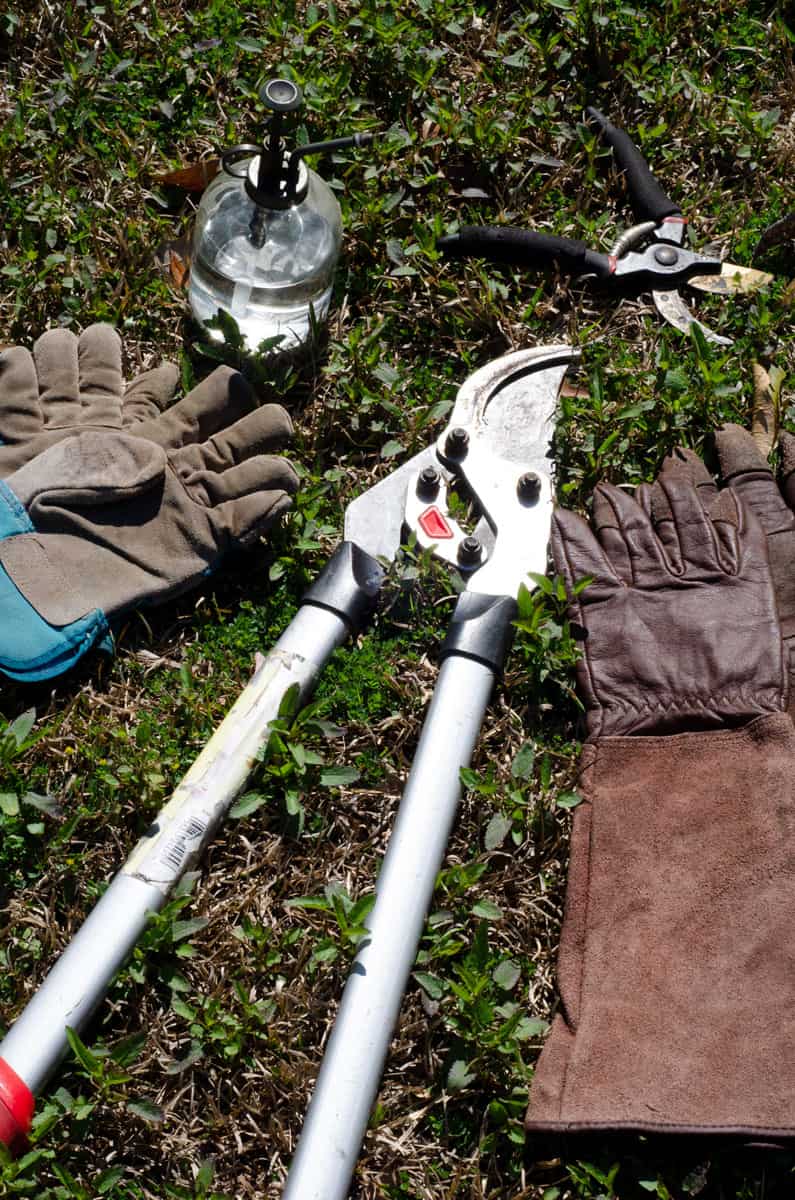
The most important thing you need for pruning is, well, pruners! Depending on the age of your tree and the size of your branches, you may need to start with a folding pruning saw. This will help you get any of the larger branches that the loppers can't make it through.
From there, you need pruning loppers. This is what I start with, as a prune each year and so they don't have a chance to get super duper thick. I use this to take off any branches in a larger circumference that need to come out first to open up the tree, and to take off any diseased or dead wood.
Once you've got the bigger branches out, you need to go through and thin out any shoots or crossovers that don't belong. For this you'll need what are called bypass pruners or pruning shears.
Depending on the size of your tree, you may need a ladder to reach the higher branches. Ours are still fairly young, so I'm able to access everything I need to from the ground or from a small stepladder. Once they get taller, it's nice to have an extension ladder that you can adjust the height of based on the tree.
Gardening gloves
One thing citrus trees have a lot of are thorns! I started out with these short gardening gloves that I use for the rest of my home gardening. After snagging the sleeves of many of my favorite shirts, I gave up on the regular length gloves and got these leather elbow length gloves.
These guys are a non-negotiable for me with citrus trees. They come all the way up to the elbow and protect you from the dagger thorns that many citrus trees tend to carry! When you're pruning a thorny branch and need to reach in and pull it out of the tree, these are a must.
Sterilization
It's really easy to spread diseases or infections from tree to tree when pruning. You're creating an open wound on the tree that hasn't had a chance to heal, and if you go from one tree that has an infection to one that doesn't, it can easily be transferred over on the pruners.
To prevent this, you want to spray your pruners, loppers, or saw with isopropyl rubbing alcohol between each cut. We have a spray bottle like this one, and I just spritz both sides before moving onto the next tree.
If you want to be extra cautious, you can spray between every branch cut, in the event that a tree has one infected branch but I just do it between trees.
Step-by-Step: How to Prune Citrus Trees
Remove Dead or Diseased Wood
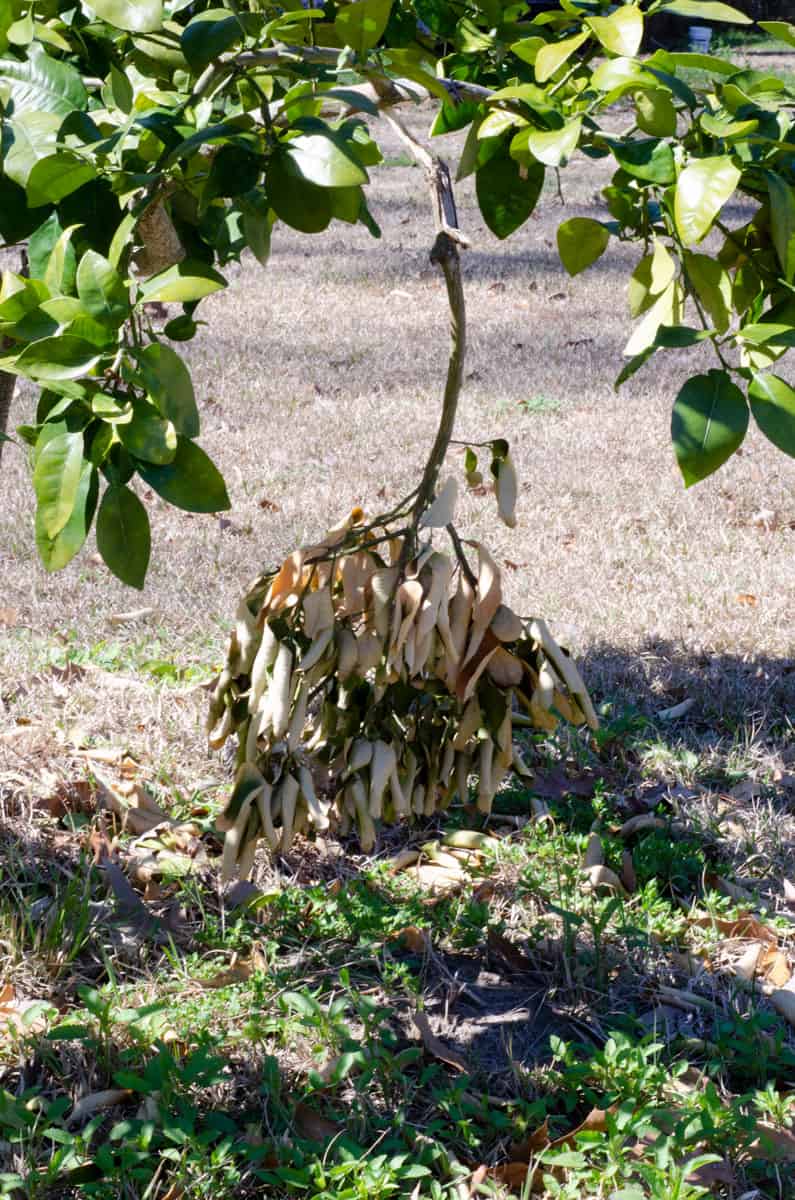
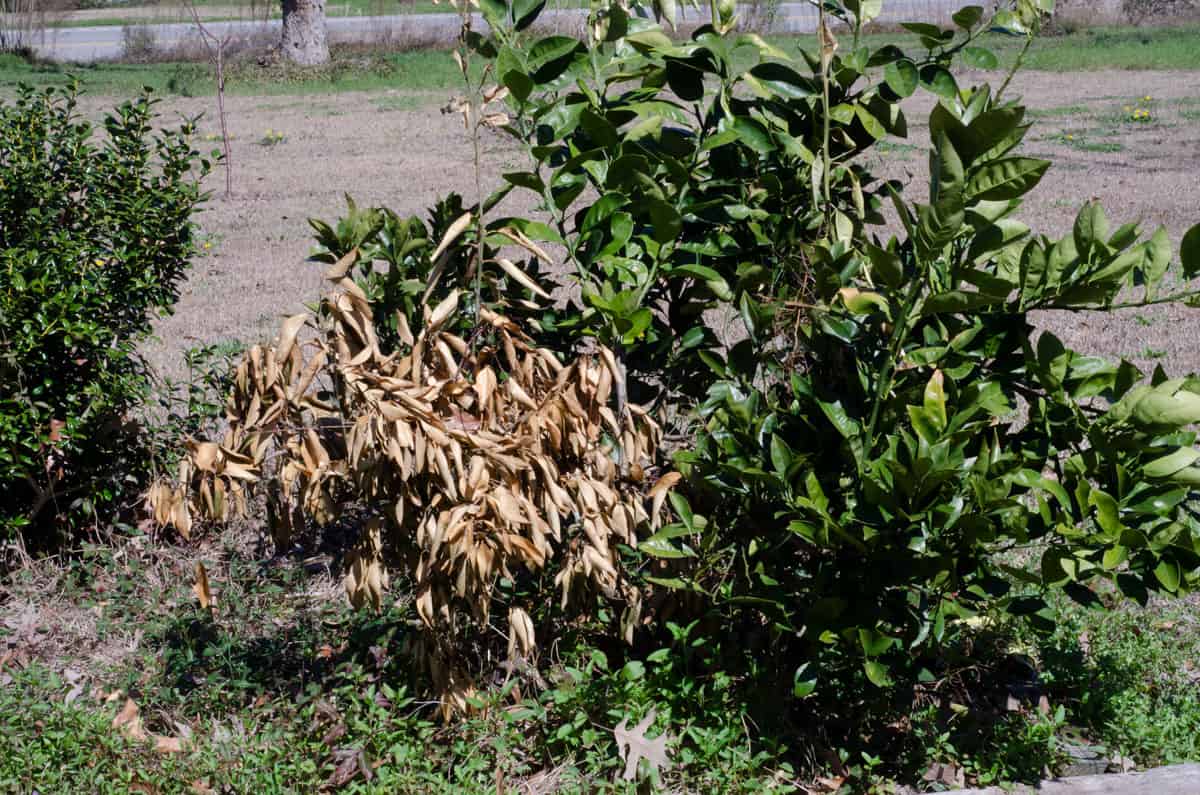
The first thing you want to take off your citrus trees when pruning is any dead or diseased wood. For us, this is usually anything that's gotten frozen over the winter and has died back.
Taking out the dead spots will force more growing energy into the newer, healthier growth, rather than the tree pouring energy into something it can't save. Here are a few examples of the dead branches I removed:

Remove Suckers Below the Graft Line
Suckers are little shoots that grow off the rootstock of the tree. The tree will likely have a graft line, where it was grafted together. Either way, when you see these little shoots coming off the trunk, you want to pull them off.
This is the tree sending energy to the wrong place. We want it to grow up and out, and grow above the graft line to produce fruit. Usually if you get to them early enough, you can just snap them off with your fingers, but if need be you can clip them also.
Here's what they will look like: (photo courtesy of Fred Hoffman)

Cut Out Crossing Branches (and vertical ones!)
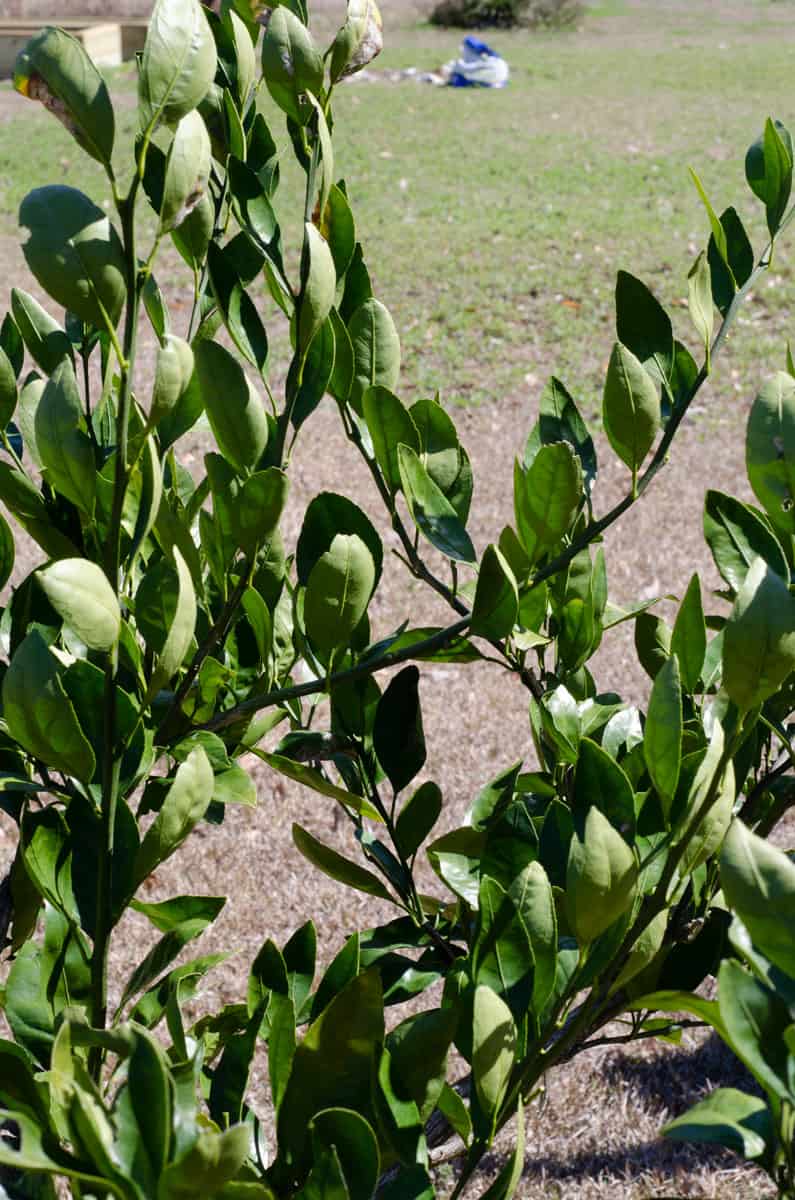
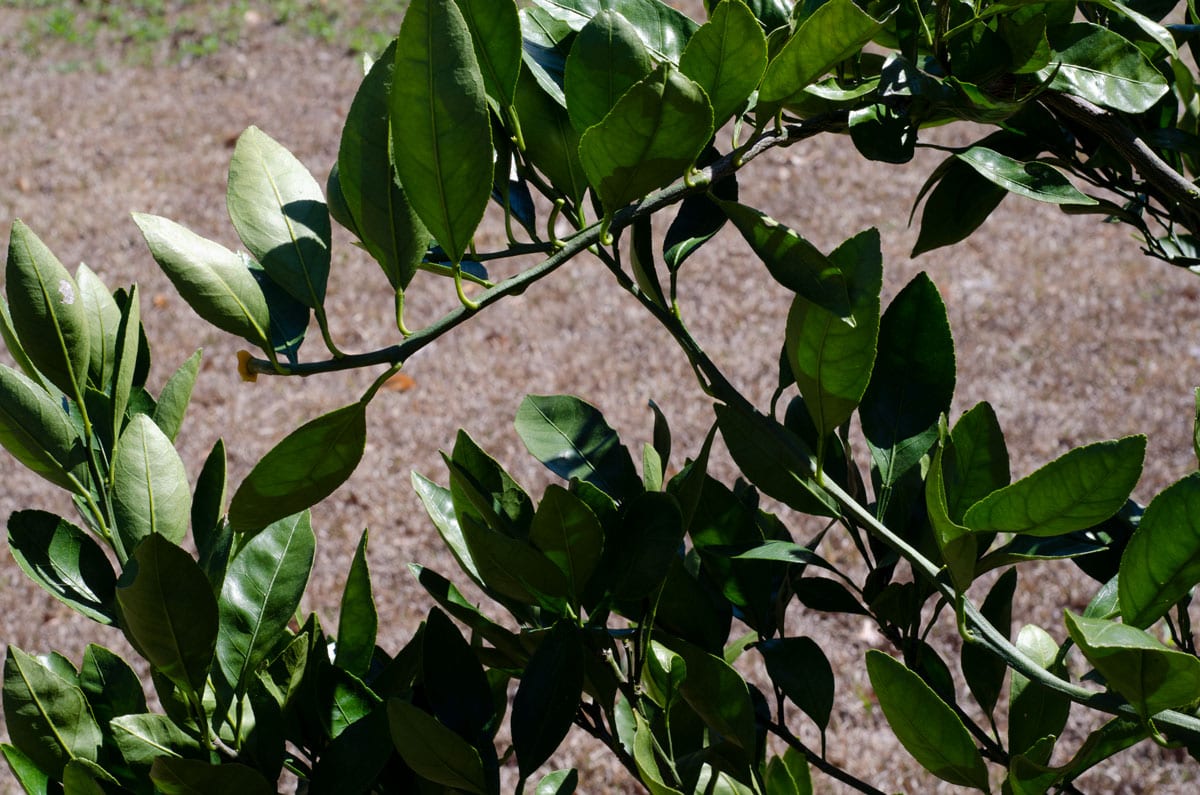
You don't want any branches that are crossing over each other - this reduces airflow and can cause friction. If the branches rub together in the wind, it can create an open wound that allows an entry point for pests and diseases. Here are some examples of crossing branches I removed:
Open the Center for Sunlight and Shape — Don’t Top
Tree topping is a destructive practice involving cutting main branches back to stubs, ruining a tree's natural shape, health, and structural integrity. It causes decay, insect pests, and weak, dangerous regrowth.
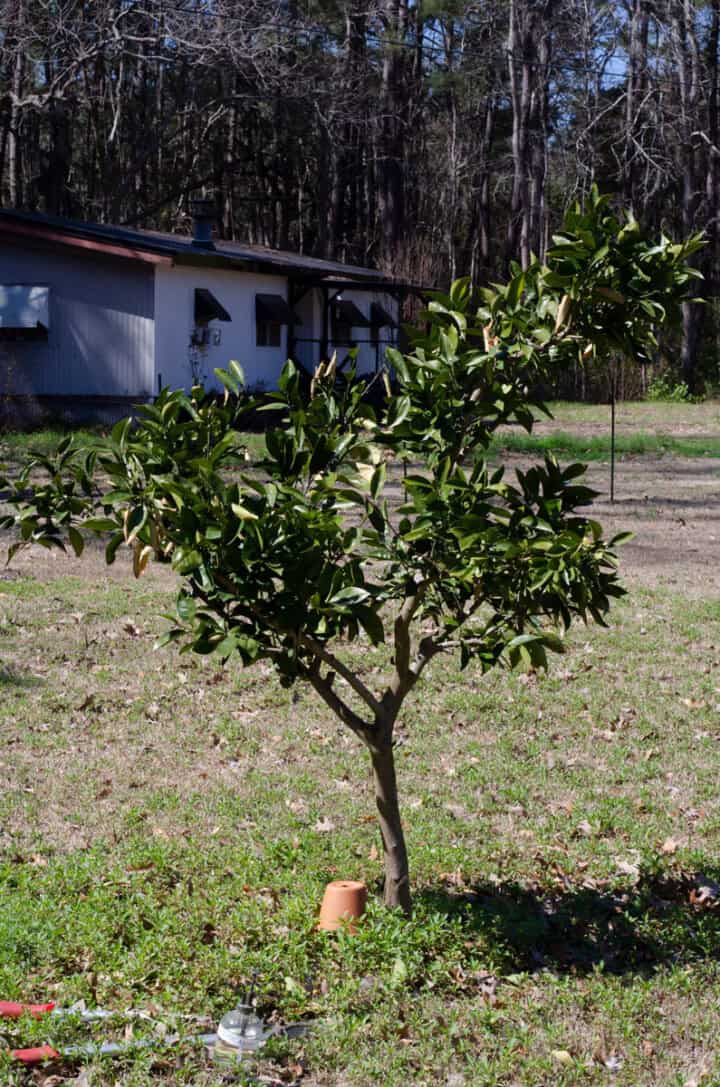
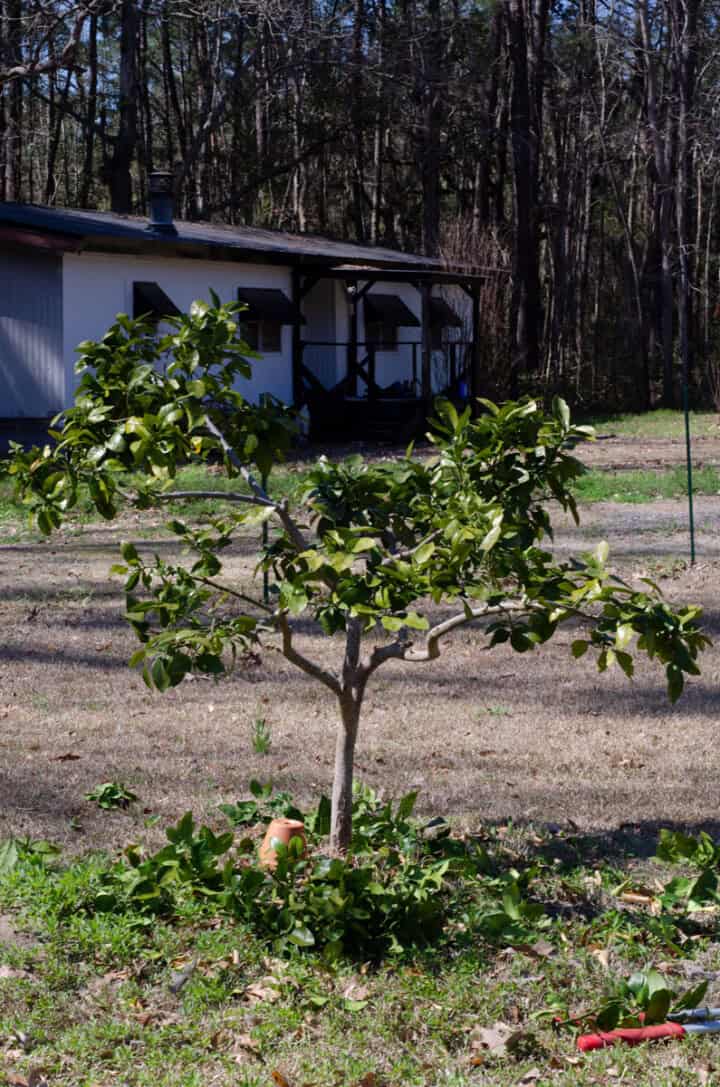
You want to encourage your tree to grow in a goblet shape, so we're going to trim the branches to make this shape and it will grow the way you cut it over time. You'll always have to prune, but you want to tell it what it should look like!
Here are two of the trees I pruned in a before and after, showing how they were opened up for sunlight, airflow, and shaped as best as I could with how they were growing this year:


Common Citrus Pruning Mistakes That Reduce Your Harvest
Not disinfecting correctly, thus spreading disease between trees.
Best Disinfectants:
- Rubbing Alcohol (70% Isopropyl): Best for frequent, quick, in-field cleaning.
- When to Clean:
- Between Cuts: Necessary when pruning diseased branches (e.g., fire blight).
- Between Trees: Essential to prevent spreading pests or diseases from one tree to another.
Pruning in the wrong season: You want to prune citrus in late winter/early spring, after the last frost has passed. Pruning encourages growth and if you prune before the last frost, all your new growth will freeze and die off, damaging the tree.
You can also prune in early fall, before fruit has set and when summer temps have dropped, but after harvest and last frost is typically the best option.
FAQ
1. When is the best time to prune citrus trees?
The best time to prune citrus trees is in late winter or early spring after the risk of frost has passed but before new growth begins. In warmer climates like Florida or California, light pruning can also be done after harvest.
2. How much should you prune a citrus tree?
You should remove no more than 20–25% of a citrus tree’s canopy in one season. Over-pruning can reduce fruit production and stress the tree.
3. Should citrus trees be topped?
Citrus trees should not be topped. Topping can weaken the tree, reduce fruit yield, and lead to excessive vertical sucker growth.
4. Do citrus trees need pruning every year?
Citrus trees benefit from light annual pruning to remove dead, damaged, or crossing branches. Heavy pruning is rarely necessary for home orchards.
5. How do you prune a young citrus tree?
Young citrus trees should be shaped during their first 2–3 years by removing low branches, suckers below the graft line, and weak growth to establish strong structure.
6. What tools are best for pruning citrus trees?
Use sharp hand pruners for small branches, loppers for medium growth, and a pruning saw for thick limbs. Clean tools between cuts to prevent disease spread.
7. Can pruning increase fruit production?
Yes. Proper pruning improves airflow and sunlight penetration, which encourages larger, healthier fruit and reduces pest and disease issues.
8. What happens if you don’t prune citrus trees?
Unpruned citrus trees can become overcrowded, produce smaller fruit, and develop increased risk of fungal disease due to poor airflow.
9. Should you remove citrus tree suckers?
Yes. Remove any suckers growing from below the graft union, as they drain energy and do not produce the desired fruit variety.
10. Can you prune citrus trees in summer?
Light pruning to remove dead or damaged branches is fine in summer, but major pruning should be avoided during extreme heat.
I may earn a small commission off purchases made through affiliate links in this post from Amazon and other sellers. This helps me continue to run the blog and keep providing you fresh content. Thank you for your support!



Leave a Reply